Lecture 09:Identity Infrastructure——Trust、Incident Learning 与 Agent Delegation
来源审计:把 CEO 访谈改写成 Identity Systems 课程
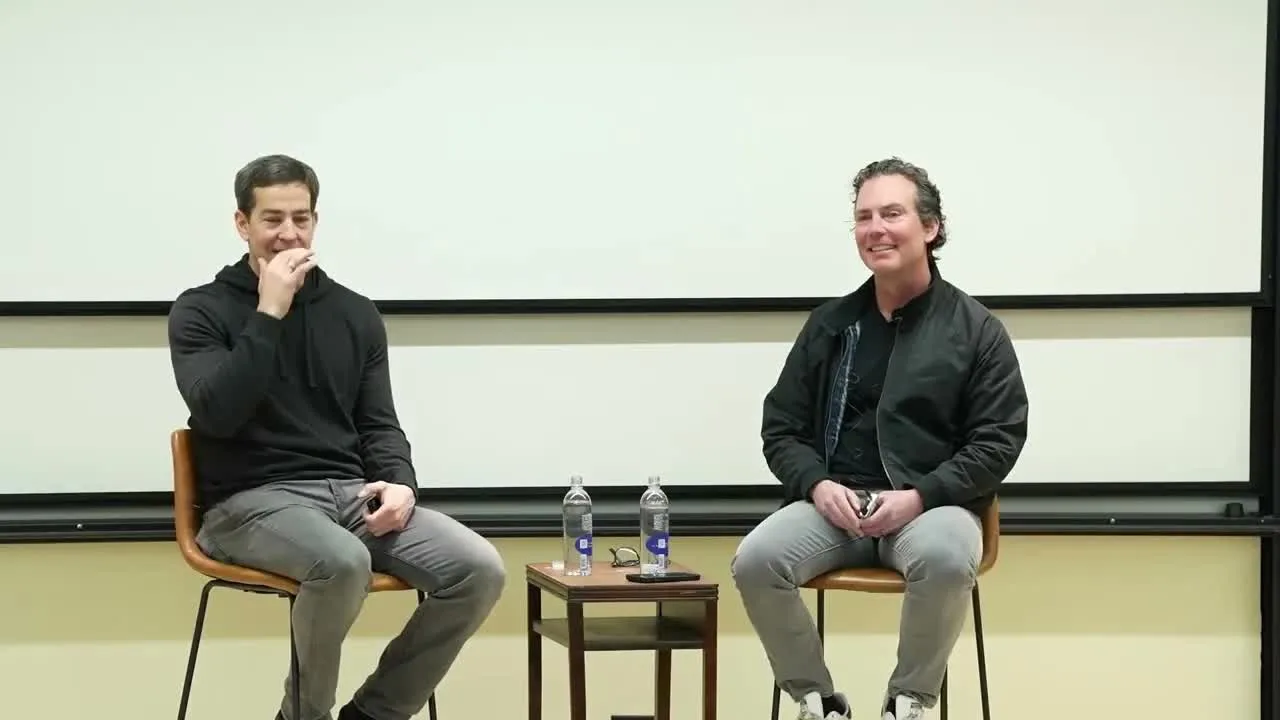
本讲由 Okta 联合创始人兼 CEO Todd McKinnon 主讲。课堂从 2009 年云计算创业窗口谈到身份基础设施、安全事件、公司文化、Auth0 并购与 AI agent。仓库保留官方封面和 1033 条时间戳字幕;本文以 2025 年 2 月访谈为课堂主线,用 Okta/Auth0 官方资料和 NIST、IETF、OpenID、W3C 标准校验 durable mechanism,不把 2026 年的 non-human identity、continuous session risk 或 Secure AI 产品能力倒写成课堂当时已经上线。
课堂数字、事故和组织判断的证据边界
讲者提到的月度登录人数、认证请求量、公司人数、客户情况和市场判断均按课堂口径保留,只用于说明 workload 与责任规模。安全事件部分用公开 RCA 校验 credential、session、logging 和 remediation 机制,但不能把复杂事故归因于某一个员工;并购与 AI 观点则是 McKinnon 的经验判断,不是普遍因果定律。
本讲的三个闭环
- Access loop:identity source \(\rightarrow\) policy \(\rightarrow\) authentication/authorization \(\rightarrow\) session/token \(\rightarrow\) audit;
- Trust loop:incident \(\rightarrow\) containment \(\rightarrow\) root cause \(\rightarrow\) remediation/notification \(\rightarrow\) customer evidence;
- Transition loop:technology shift \(\rightarrow\) focused wedge \(\rightarrow\) infrastructure depth \(\rightarrow\) organizational adaptation。
术语消化:Identity 不是“账号表”
principal(主体)是可被认证和授权的实体,可以是人、service account、workload 或 agent;identity provider(身份提供者,IdP)维护主体状态并向应用提供可信身份断言;authentication(认证)回答“你是谁”;authorization(授权)回答“你能对哪个资源做什么”;session/token 则把一次验证结果转成有限时间内可复用的访问能力。
为什么登录页只是冰山尖端
本节先确定课程对象。用户看到的是一次 login redirect 或 MFA challenge,平台真正维护的是 directory、policy、protocol、session、provisioning、availability、security monitoring 与 audit。身份服务位于许多应用的“前门”,一次错误 allow 可能成为数据泄露,一次错误 deny 或 outage 又会让整个组织无法工作,因此它同时属于 security-critical 与 availability-critical infrastructure。
本章小结
Lecture 09 的主角不是某家公司的创业传奇,而是 identity control plane。后文所有组织经验都会被翻译成系统问题:状态在哪里、决策如何产生、失败如何限制、信任如何用证据恢复。
技术转型与 Wedge:为什么是 Cloud Identity
McKinnon 把创业机会放在 cloud transition 中理解:企业应用从自建机房转向 SaaS 后,旧网络边界和本地目录不再自然覆盖所有资源。新公司无法在 incumbent 最擅长的旧市场正面复制,而应找到转型暴露的新 control point,再用一个客户愿意立刻付费的 wedge 切入。
从 Monitoring Pivot 到 SSO
团队先做 cloud application monitoring,但 buyer feedback 平淡;相反,员工面对 Gmail、Dropbox 等多个 SaaS 账户时,重复登录、密码和离职权限成为即时痛点。single sign-on(单点登录,SSO)让用户通过一个受信任 IdP 访问多个应用,减少重复凭据并集中 policy。SSO 只是 wedge,却天然要求与许多应用、目录和协议连接。
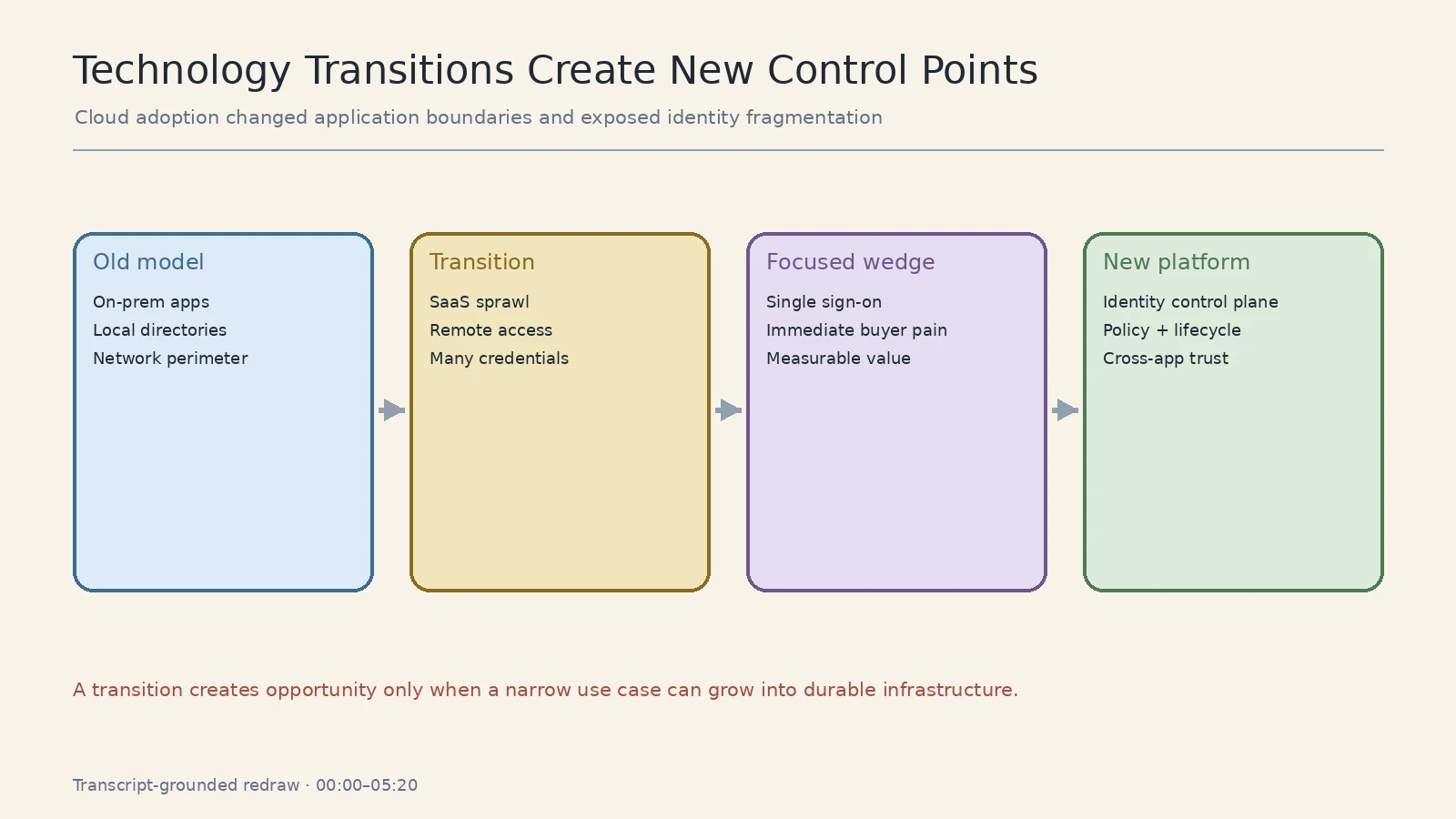
来源:本地字幕 00:00–05:20;概念重绘。
读图:Transition、pain 与 platform 要同时成立
Cloud transition 改变应用位置与购买方式;credential fragmentation 形成具体 pain;SSO 提供短期可付费结果;directory、policy 和 lifecycle 则让产品拥有平台深度。只有 transition 没有 buyer pain,会变成长期研究;只有小痛点没有扩展面,会成为 feature;只有 platform vision 没有 wedge,则很难获得第一批生产流量。
课堂提示
McKinnon 没有把第一个想法浪漫化:monitoring prototype 做出来后,潜在客户并不兴奋,团队因此转向“让 SaaS 登录更简单”。课堂提示是先寻找真实 willingness to pay,再证明小入口后面存在足够深的 infrastructure。
基础设施冰山:简单体验背后的复杂性
一个员工点击应用图标,看起来只是“少输一次密码”;系统却必须同步用户状态、选择身份源、执行认证策略、签发 assertion/token、建立 session、处理 logout 和 revoke,并在组织变更时更新 entitlements。Identity wedge 的复利来自这些共享 primitive 可服务越来越多应用,而不是来自登录页面本身。
Wedge 的两个约束
一个基础设施创业入口同时需要:today value,客户今天就愿意为更少登录摩擦、更快 onboarding 或更可控 offboarding 付费;tomorrow depth,入口能够扩展到 directory、MFA、policy、provisioning、governance 与 threat response。两者缺一,产品要么没有现金流,要么没有长期平台空间。
本章小结
Cloud identity 的机会来自应用边界变化。SSO 是可卖的前门,identity lifecycle 与 policy 才是后续平台。Pivot 的依据是客户证据,而不是创始人对第一个 prototype 的沉没成本。
Identity Control Plane:State、Policy 与 Lifecycle
上一节解释了 wedge,本节进入系统本体。Identity control plane 把分散的 HR、directory、customer signup、partner federation 和 service identity 汇聚为统一 principal model,再对每次访问执行 authentication、authorization、session 与 lifecycle policy。它不是所有数据的唯一 truth,但必须知道哪些 source 对哪些 attribute 拥有权威。
Directory 是身份状态的统一视图
directory(目录)保存 principal profile、group、relationship、credential enrollment 和 lifecycle state。Okta Universal Directory 的 durable idea 是把 Active Directory、LDAP、HR、应用和 API 的异构 identity 映射成可预测的数据模型。source of truth(权威来源)应按字段定义:例如 HR 决定 employment status,应用决定本地 role,IdP 决定 authenticator enrollment,不能用“最后写入者”覆盖所有语义。
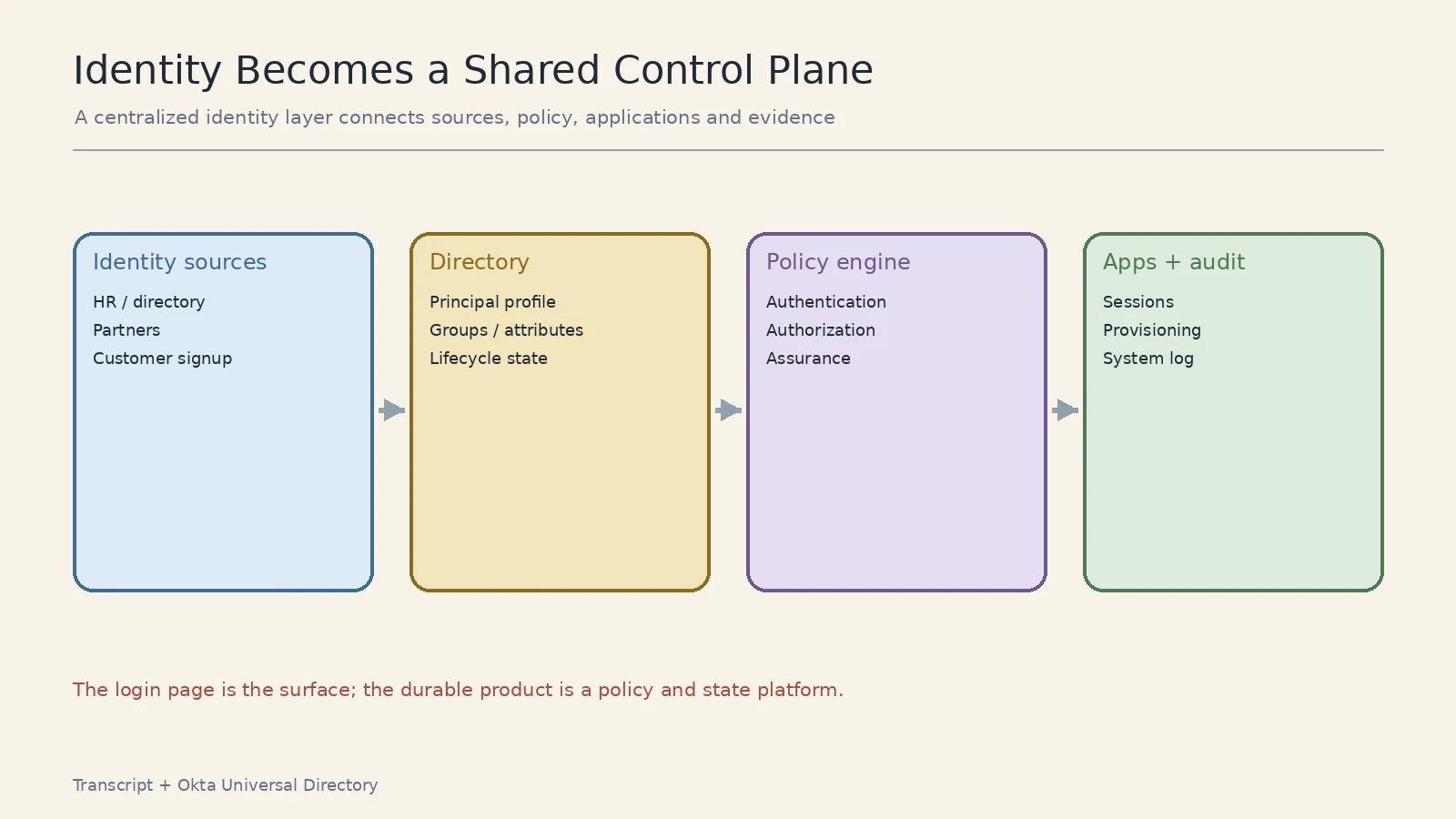
来源:本地字幕 03:00–06:10;Okta Universal Directory 官方概念;概念重绘。
读图:先问状态从哪里来、到哪里去
Identity source 负责创建或更新事实;directory 规范化 principal、group 和 attribute;policy engine 根据目标应用与上下文做访问决策;apps 和 audit 接收 token、provisioning event 与系统日志。真正困难的是 conflict、freshness、deletion 和 ownership:当 HR 与本地目录冲突时谁获胜,离职事件多久传播,derived group 如何重算,审计如何证明某次 allow 使用了哪个版本的状态。
Authentication、authorization、provisioning 与 audit
multi-factor authentication(多因素认证,MFA)要求来自不同 factor category 的证据,例如 possession 与 inherence;WebAuthn/passkey 使用公钥凭据,可提供 phishing-resistant authentication。认证成功并不代表用户可访问所有资源,authorization 仍需检查 group、role、attribute、device、risk 与 requested action。
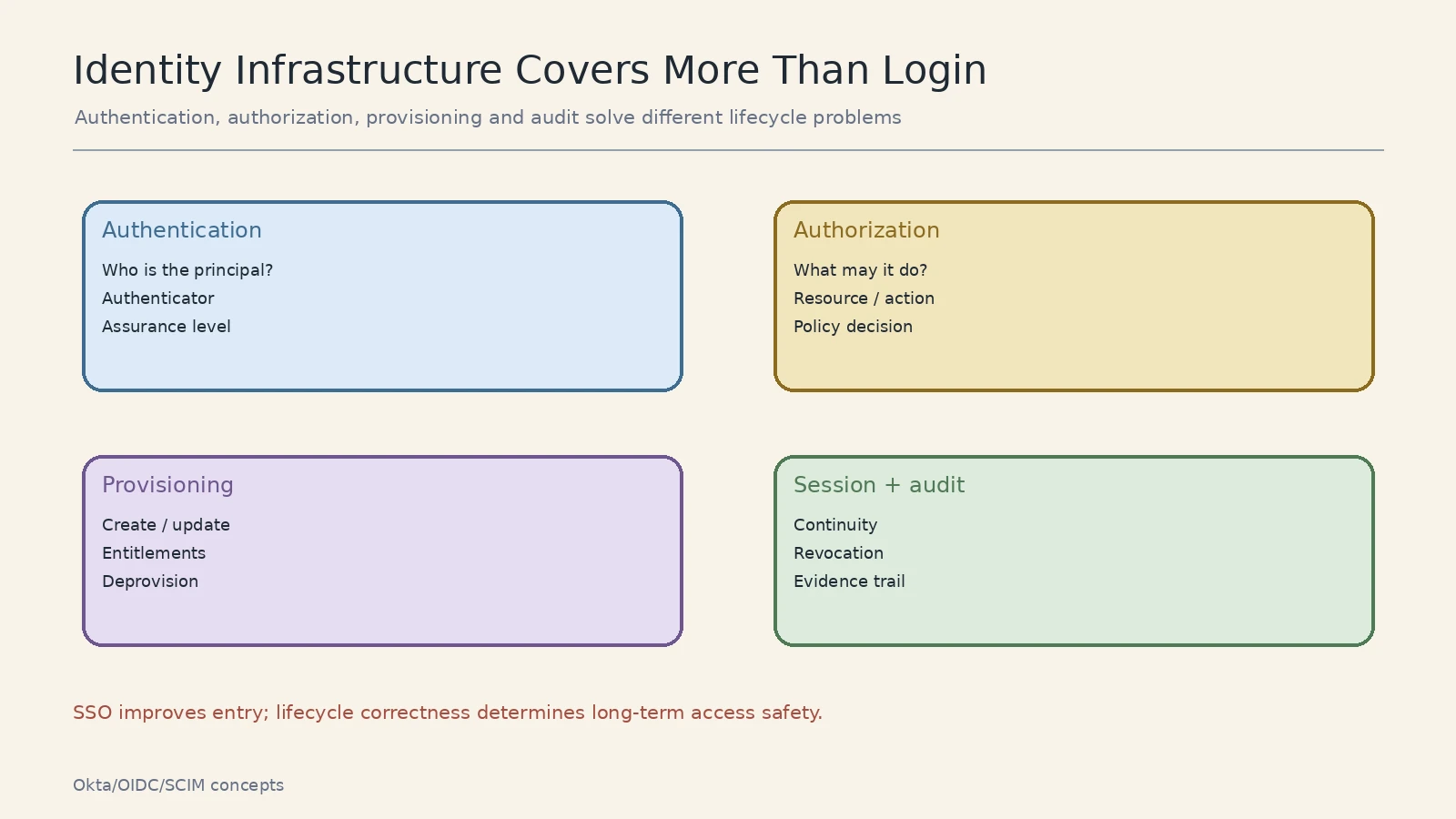
来源:Okta/OIDC/SCIM/WebAuthn 概念;概念重绘。
读图:Login 与 lifecycle 的时间尺度不同
Authentication 在秒级回答当前主体;authorization 在每个资源动作上约束权限;provisioning(供应)把账户和 entitlement 创建到下游应用;SCIM(System for Cross-domain Identity Management)用标准 API 同步用户与 group;session/audit 则持续到登出、风险变化、离职或调查。SSO 可能正常,而 offboarding 失败仍留下 orphan account,因此安全指标必须覆盖整个 lifecycle。
MFA 不是 session theft 的万能药
MFA 能显著降低仅凭密码接管账户的风险,但若攻击者窃取已建立的 bearer session、诱导用户批准错误 challenge,或控制恢复/help-desk 流程,仍可能绕过预期保障。系统需要 phishing-resistant authenticator、session binding、risk re-evaluation、recovery control 和快速 revoke,而不是只统计 MFA enrollment。
本章小结
Identity control plane 统一的是状态和决策接口,而不是抹平所有 source ownership。认证、授权、provisioning、session 与 audit 属于不同生命周期,必须分别定义 correctness 和 recovery。
Front-Door Reliability:安全与可用性共同成立
身份服务承担组织入口,一旦不可用,邮件、代码、CRM、云控制台和内部工具可能同时失效;一旦错误放行,攻击者又可跨应用扩散。因此 reliability 不能只测 uptime,security 也不能只测 blocked attacks。系统需要 availability、latency、policy correctness、state freshness 和 safe change 的联合 SLO。
SLO、blast radius 与 safe change
service-level objective(服务水平目标,SLO)是系统在统计窗口内承诺达到的可测目标,例如成功认证比例或 p99 latency。blast radius(故障半径)表示一次错误影响的 tenant、region、application 或 principal 范围。Multi-tenant identity 平台提高共享效率,也要求更强 isolation、canary、rollback 和 dependency budget。
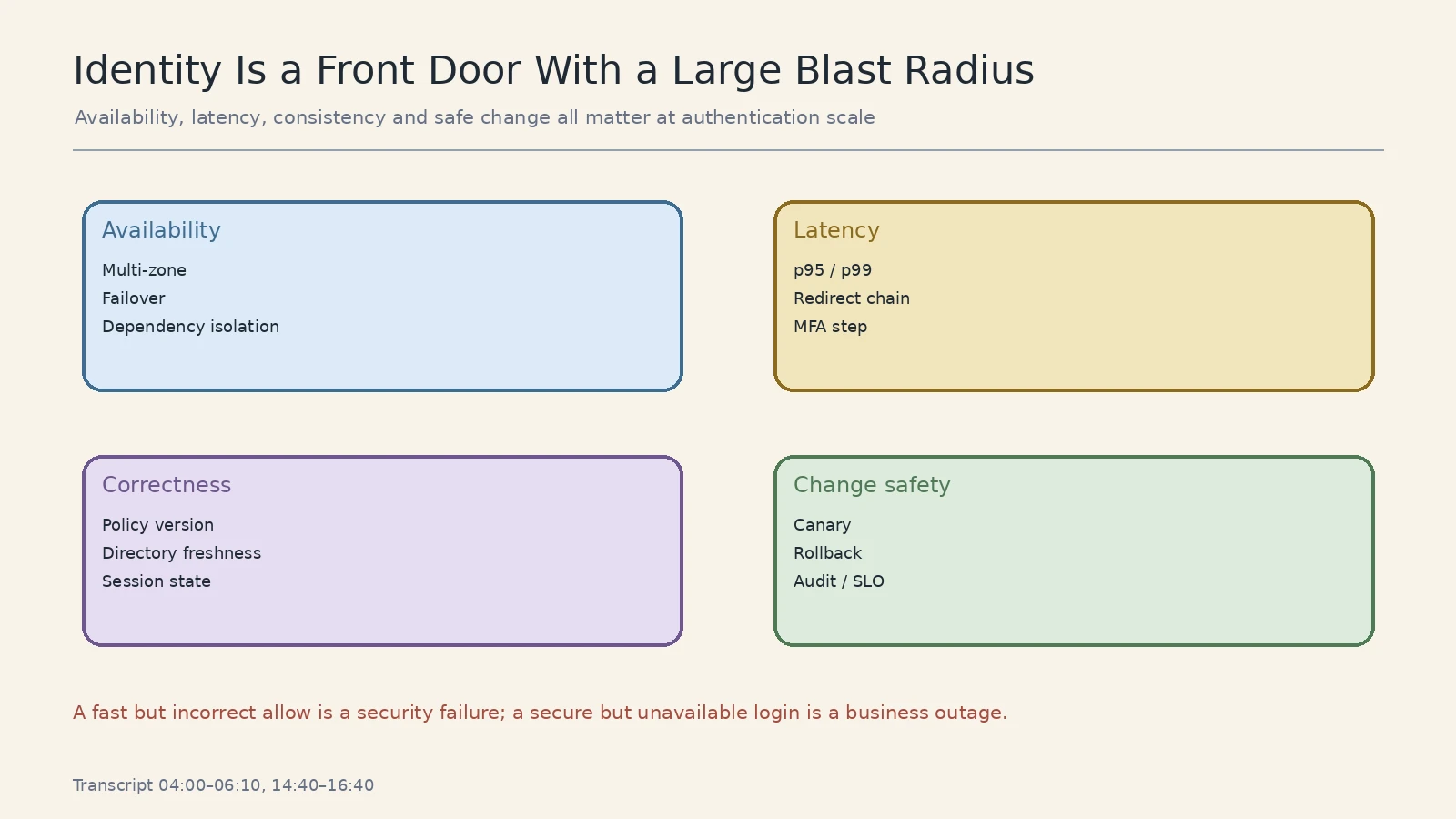
来源:本地字幕 04:00–06:10、14:40–16:40;概念重绘。
读图:四个维度不能互相替代
Availability 看合法请求是否完成;latency 看 redirect、factor 和 policy chain 是否在可接受尾延迟内结束;correctness 看 allow/deny 是否使用正确 principal、policy 与 session;change safety 看新规则、connector 或代码能否小范围验证并快速回退。99.99% uptime 不能掩盖错误授权,极严 policy 也不能合理化全员无法登录。
Error budget 需要区分安全错误
普通 SLO 可写为
其中 \(N_{failed}\) 是符合统计条件却未成功的请求,\(N_{eligible}\) 是全部 eligible requests。但身份系统还要单独追踪 false allow、false deny、stale entitlement 和 revoke delay;这些 correctness/security error 不应被一个总 availability 数字平均掉。
每次访问都是 context-aware policy decision
assurance(保障等级)描述系统对“当前主体确实是账户拥有者”的置信程度,取决于 authenticator、设备和上下文。Okta Identity Engine 与 Zero Trust 的共同思想是:请求目标应用不同、风险不同,所需 assurance 也不同;低风险应用可复用 session,高敏感操作则要求 step-up authentication。
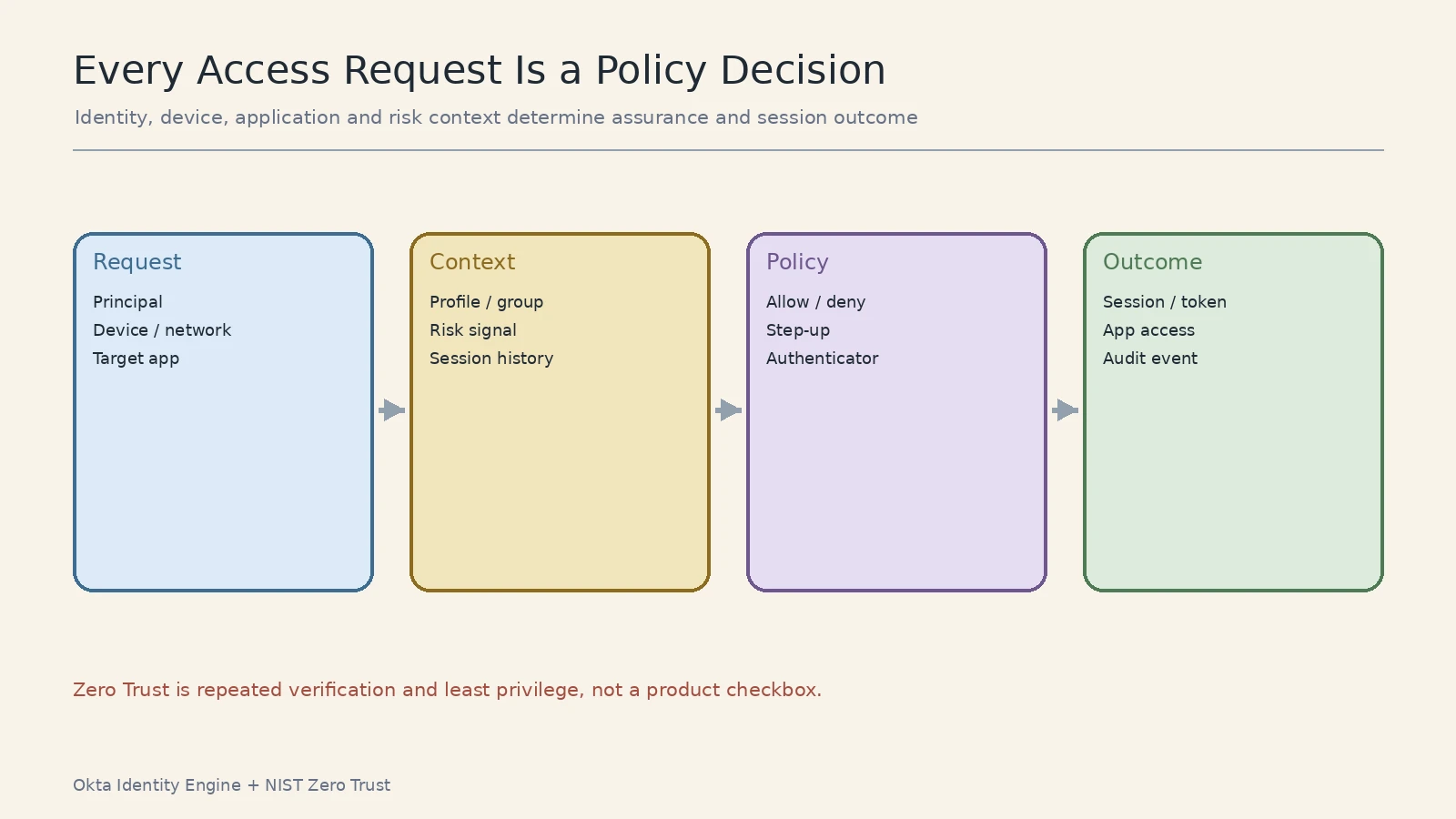
来源:Okta Identity Engine policy model;NIST SP 800-207;概念重绘。
读图:Policy 决策必须可重放
Request 带 principal、device/network 和 target app;context 汇集 profile、group、risk 与 session history;policy 输出 allow、deny 或 step-up;outcome 创建 session/token 并记录 audit event。为了调查一次异常 allow,系统必须保存 policy/version、关键 attribute、risk signal、authenticator、decision reason 和 token/session ID,而不是只留“登录成功”。
本章小结
Identity reliability 是“正确主体以正确保障访问正确资源,并可在风险变化时撤销”。SLO、故障半径、policy correctness 与 safe rollout 必须一起设计。
Founder Adaptation:从确定性组织到低概率系统
课程随后转向创始人角色。McKinnon 离开 Salesforce 时,失去团队、品牌、行政支持和高概率晋升路径;创业系统的输入变成有限 runway、模糊 buyer signal 和不断变化的假设。本节保留这段 teacher voice,因为它解释了基础设施公司早期如何在没有完整证据时仍建立可验证进展。
Resource Reset 与 daily evidence
创始人不能把“信念”当作拒绝数据。更稳健的循环是把大愿景拆成每天可更新的 evidence:谁愿意接受访谈,哪种 pain 会触发预算,prototype 是否接入真实 directory,first tenant 是否稳定,第一笔付款是否重复。每一步都降低一类不确定性,并为下一轮招人、融资或产品取舍提供依据。
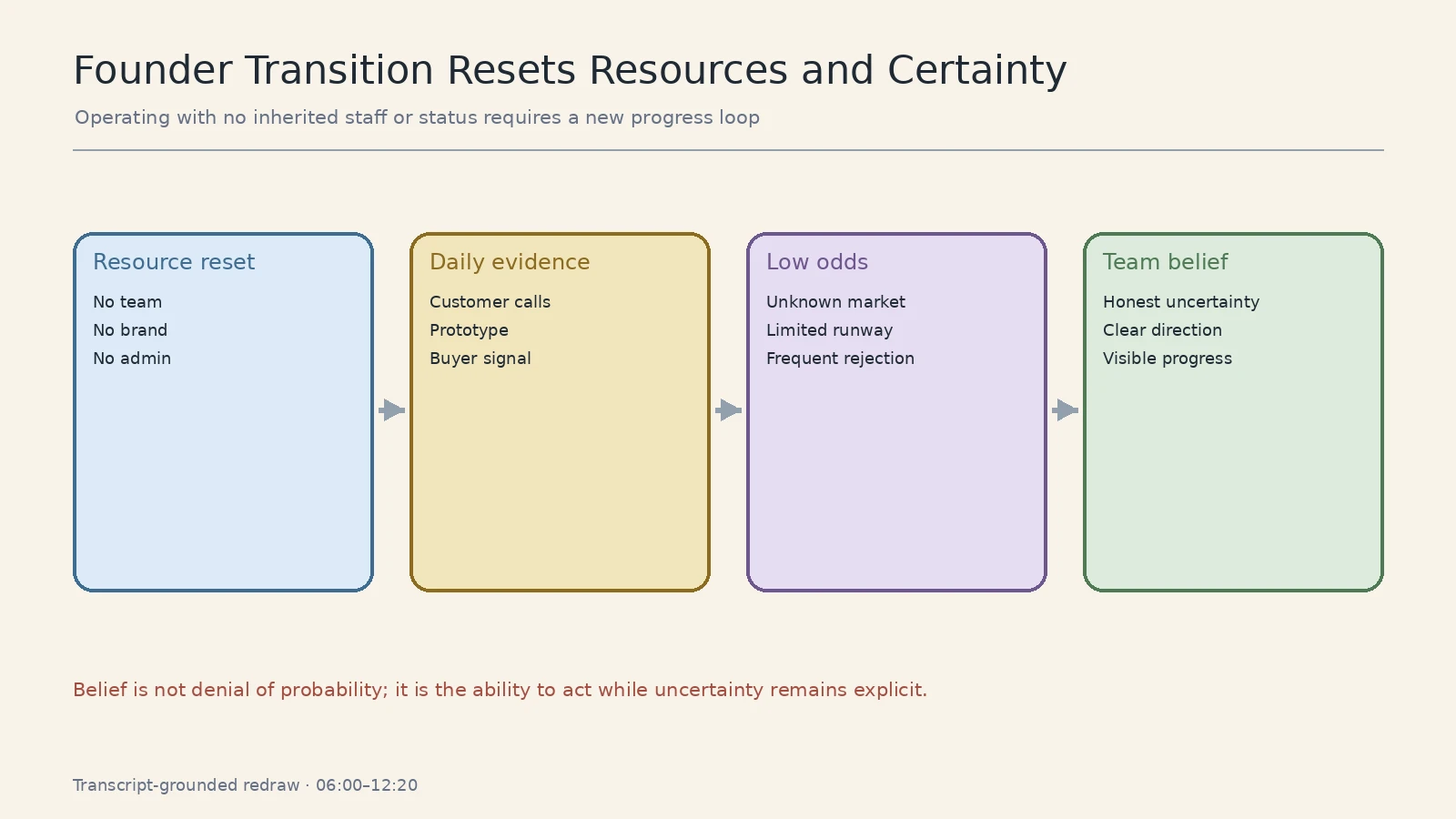
来源:本地字幕 06:00–12:20;概念重绘。
读图:Belief 与 probability 可以同时存在
Resource reset 说明旧组织优势不能自动带走;daily evidence 把愿景转成 customer/prototype 信号;low odds 要求明确 runway 和 stopping rule;team belief 则需要方向、诚实与可见进展。讲者所说“即使不相信也要相信”不应理解为欺骗团队,而是领导者在承认概率不利时仍能组织行动。
课堂提示
McKinnon 坦率地说,离职的动机既有技术机会,也有“想自己当老板”的个人愿望;真正困难的是在金融危机、新生儿和家庭风险面前做共同决定。课堂把 founder risk 从个人英雄叙事拉回家庭、资源和机会成本。
不要把 survivorship bias 写成创业公式
Okta 后来的成功不能证明“离开大公司”“坚持足够久”或“中年经验”必然带来结果。可迁移原则是选择与自身能力匹配的 market、尽快获得 buyer evidence、限制不可逆风险,并在新证据出现时更新计划;结果仍受到时机、竞争、资本和运气影响。
本章小结
Founder adaptation 是从 inherited resources 转向 evidence loop。信念负责持续行动,概率与指标负责纠偏;两者缺一都会让组织失去现实感。
CEO 与 Board:建立不失真的信息回路
公司扩大后,CEO 不再是所有问题的直接解决者,而是信息、资本、人才和风险的汇聚点。角色的“孤独”常不是没人说话,而是坏消息在层级中被过滤、团队期待确定答案、董事会又只能基于管理层提供的 evidence 做判断。系统解法是明确 decision rights 和 unfiltered information loop。
Bad news、options 与 accountability
管理团队应把 operating truth 转成可讨论对象:指标发生了什么,客户或安全风险在哪里,哪些 root cause 已证实,哪些只是 hypothesis,有哪些 options、trade-off 和 time constraint。董事会的作用不是替管理层运行公司,而是挑战假设、配置资本和监督重大风险;CEO 则对最终选择与 follow-through 负责。
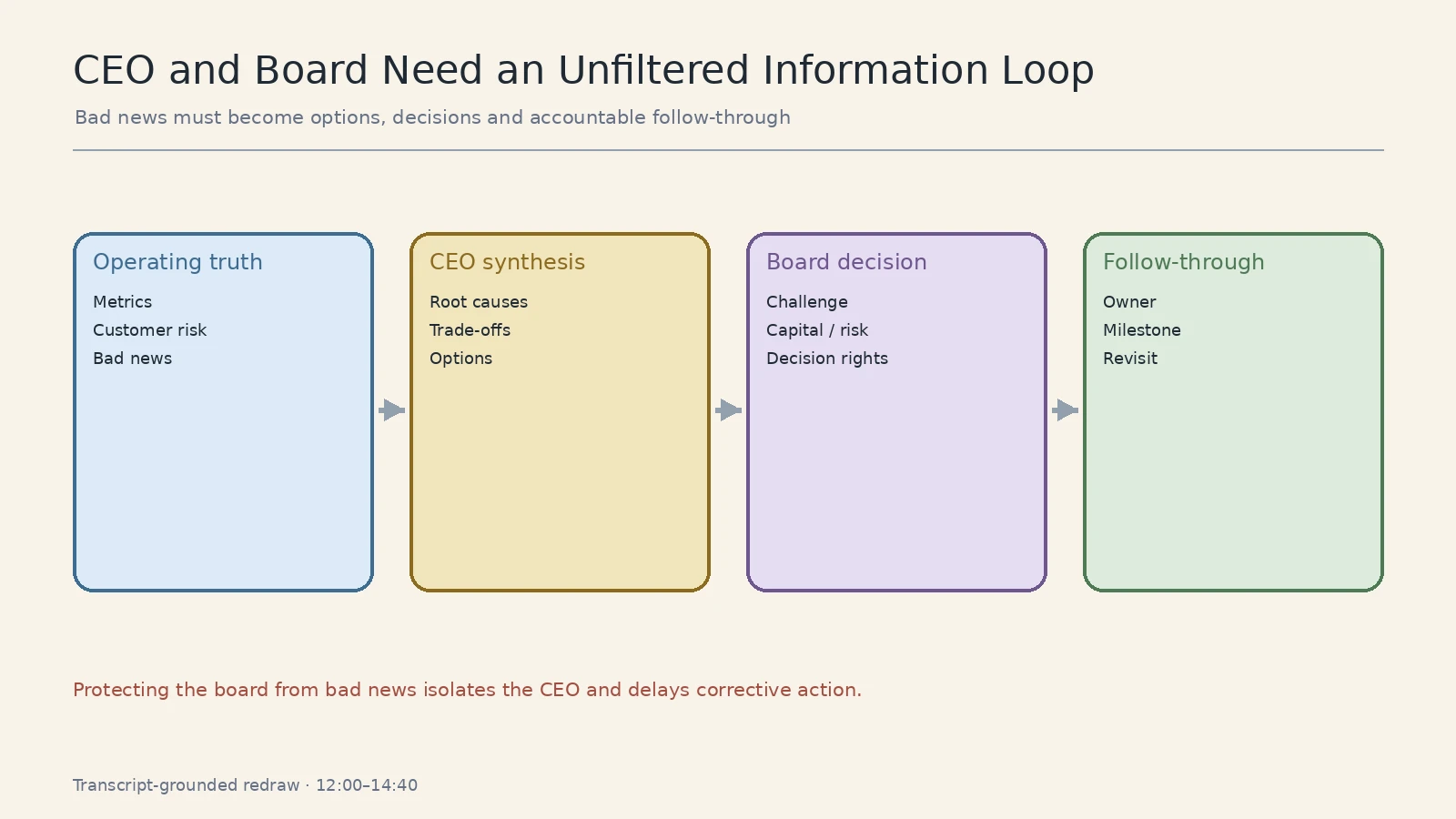
来源:本地字幕 12:00–14:40;概念重绘。
读图:Dashboard 不能代替坏消息叙事
Metrics 告诉董事会“哪里异常”,customer evidence 与 incident timeline 解释“为什么重要”,options 明确“可以做什么”,owner/milestone 让决策可复查。如果 CEO 只报告已经解决的问题,board 会在真正需要支持时才第一次接触上下文;如果 board 越过 CEO 直接管理执行,又会破坏责任链。
课堂提示
讲者回顾早期董事会互动时,认为自己曾过度想证明“一切都在掌控中”。后来更有效的方法是把困难和坏消息提前带入讨论。对 frontier systems 团队而言,这等价于让风险在还能选择时出现,而不是在 outage 或 breach 后才升级。
本章小结
CEO/board loop 的质量取决于信息完整、option clarity 与责任边界。孤独不能靠更多 status meeting 解决,而要靠能容纳不确定性和坏消息的治理结构。
Security Incident:从危机到可验证改进
Identity provider 是高价值目标,安全事件会直接挑战客户最核心的信任假设。课堂强调事件带来的痛苦和文化转型;官方 RCA 则提供一个更具体的系统视角:credential 如何暴露、日志查询为何遗漏、session token 如何被利用、何时 containment、怎样通知客户,以及哪些 control 被永久改变。
Incident response 五阶段
一个完整 incident lifecycle 至少包含 detection、containment、investigation、remediation 和 notification。Detection 可能来自内部 telemetry,也可能来自客户或合作伙伴;containment 要禁用 account、revoke session/token 并限制接口;investigation 建立 timeline 和 affected scope;remediation 修复 credential、logging、workflow 与 product control;notification 则向受影响客户提供可执行信息。
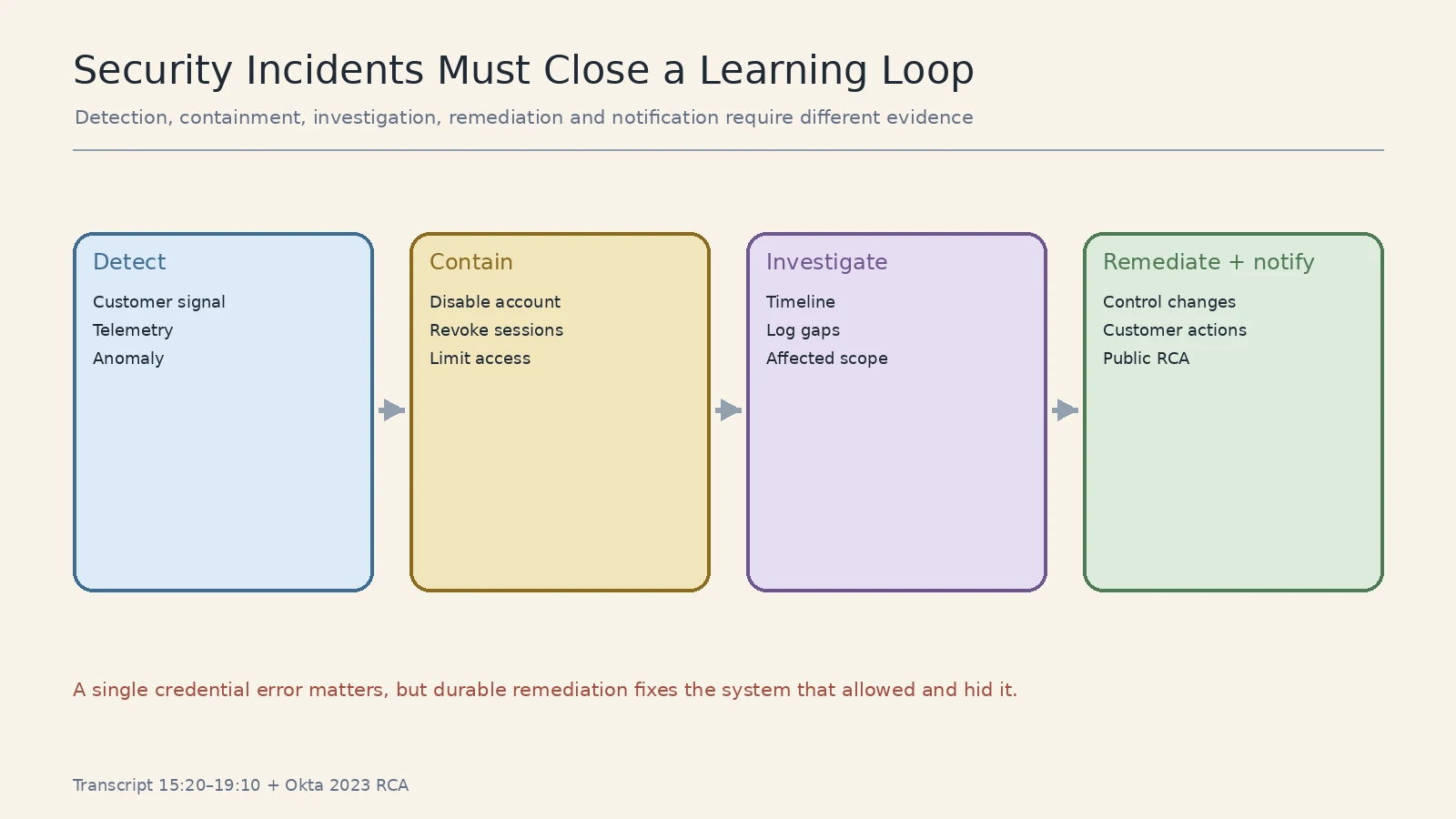
来源:本地字幕 15:20–19:10;Okta 2023 support-system RCA;概念重绘。
读图:RCA 要解释“为什么没更早发现”
Root cause 不只寻找最初错误,还要解释防线为何未阻止、telemetry 为何未显示、investigation query 为何漏掉、session revoke 为何延迟,以及客户信号如何进入响应。官方 2023 RCA 说明不同文件访问路径生成不同 log event,初始查询因此不完整;这个细节展示 observability schema 本身也属于 security control。
Containment 与 remediation 不同
禁用 service account、revoke session 和阻断 IP 是 containment,目标是停止当前伤害;阻止个人 profile 保存公司 credential、增强文件访问 telemetry、绑定管理员 session、改进 customer notification 才是 remediation,目标是降低复发概率和缩短未来 detection time。两者需要不同 owner 和完成证据。
透明度不是一次博客发布
Customer trust 需要及时 scope、受影响对象、recommended action、已知未知项和后续更新。过早给出未经证实的确定结论会反噬信任,过晚披露又让客户失去 containment 时间。Incident communication 应与 forensic confidence 同步,并保存谁在什么时间知道什么的 decision log。
课堂提示
McKinnon 说安全事件是职业生涯最艰难的时期之一,因为 headline 会把身份公司与“被攻破”直接绑定。值得保留的课堂判断是:无法靠口号恢复信任,只能把痛苦转成 security-first 的资源、行为和可验证控制。
Security-first culture 是 operating system
Culture 不是墙上的 value list,而是领导者反复询问什么、launch 时愿意延迟什么、预算给谁、晋升奖励什么、坏消息是否被惩罚。若“security first”只要求 security team 加班,而 product roadmap、sales commitment 和 executive review 不改变,组织接收到的真实信号仍是 feature first。
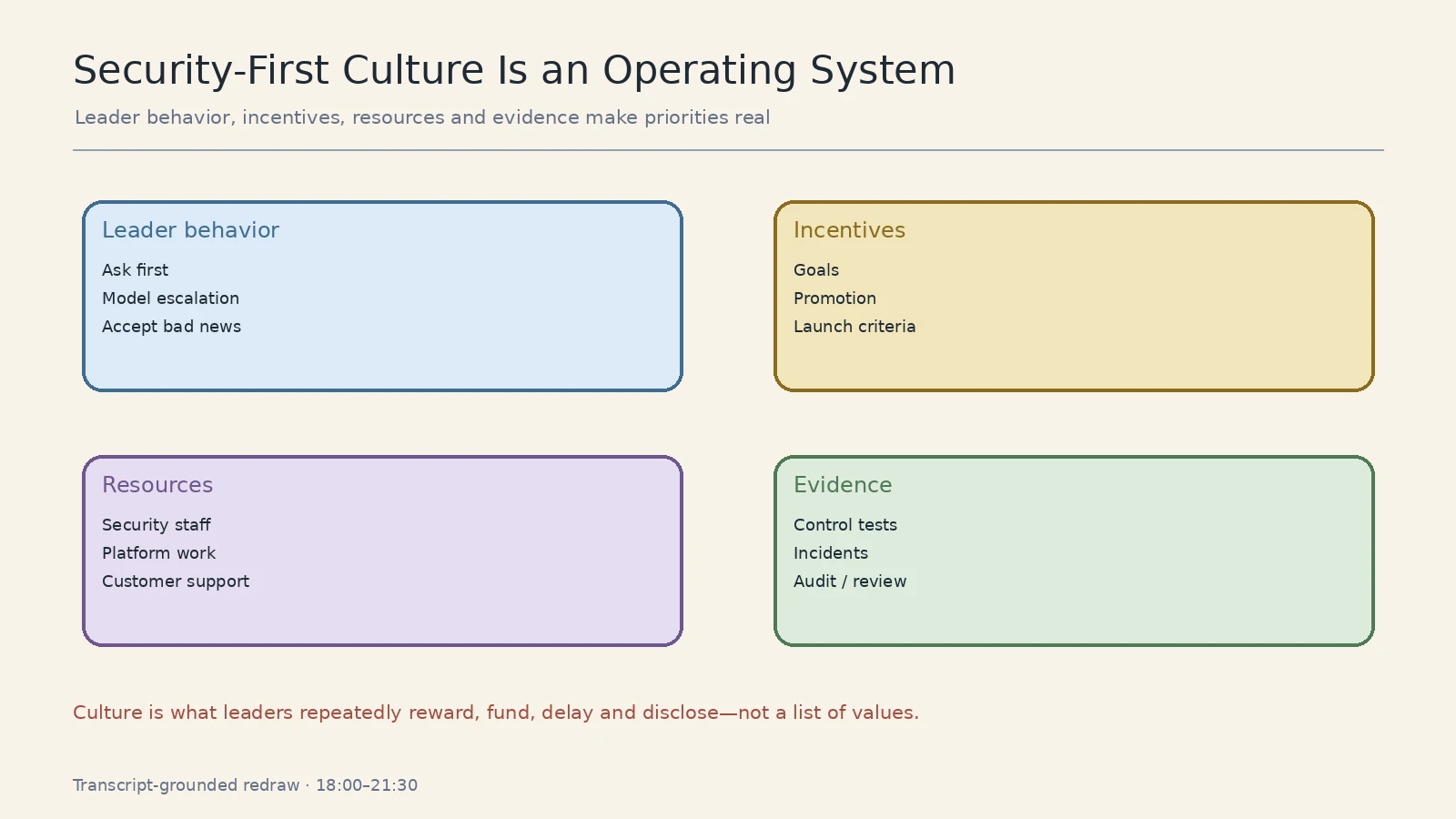
来源:本地字幕 18:00–21:30;概念重绘。
读图:Culture 可以被审计
Leader behavior 看高层是否主动问风险和接受 escalation;incentive 看目标、绩效与 launch criteria;resource 看平台改造、security staffing 和 customer support 是否获得预算;evidence 看 control test、incident metric、audit 和 postmortem 是否进入 review。Culture 虽然难以精确量化,却能通过重复行为和 resource allocation 观察。
本章小结
Incident response 的目标不是“恢复绿灯”,而是建立可复查的 learning loop。Security-first 只有进入决策、资源和工程证据,才会在下一次压力中生效。
Attack Asymmetry、Shared Signals 与 Zero Trust
攻击者只需找到一个 credential、session、help-desk 或 integration gap,防守方却要协调 endpoint、identity、application、data 和 human workflow。课堂把这种不对称与信息共享障碍联系起来;系统设计需要 defense in depth,也需要在隐私和法律边界内交换 risk signal,减少每家组织独立发现同一攻击模式的时间。
一处弱点对多层防线
防守团队不能把所有风险压给 IdP。Endpoint compromise、phishing、malware、OAuth consent、stale account、over-privileged service account 和 application bug 都可能绕过单一检查。Identity layer 的优势是看到跨应用登录、factor、session 和 group 状态,但它仍需接收 EDR、network、application 与 customer-reported indicators。
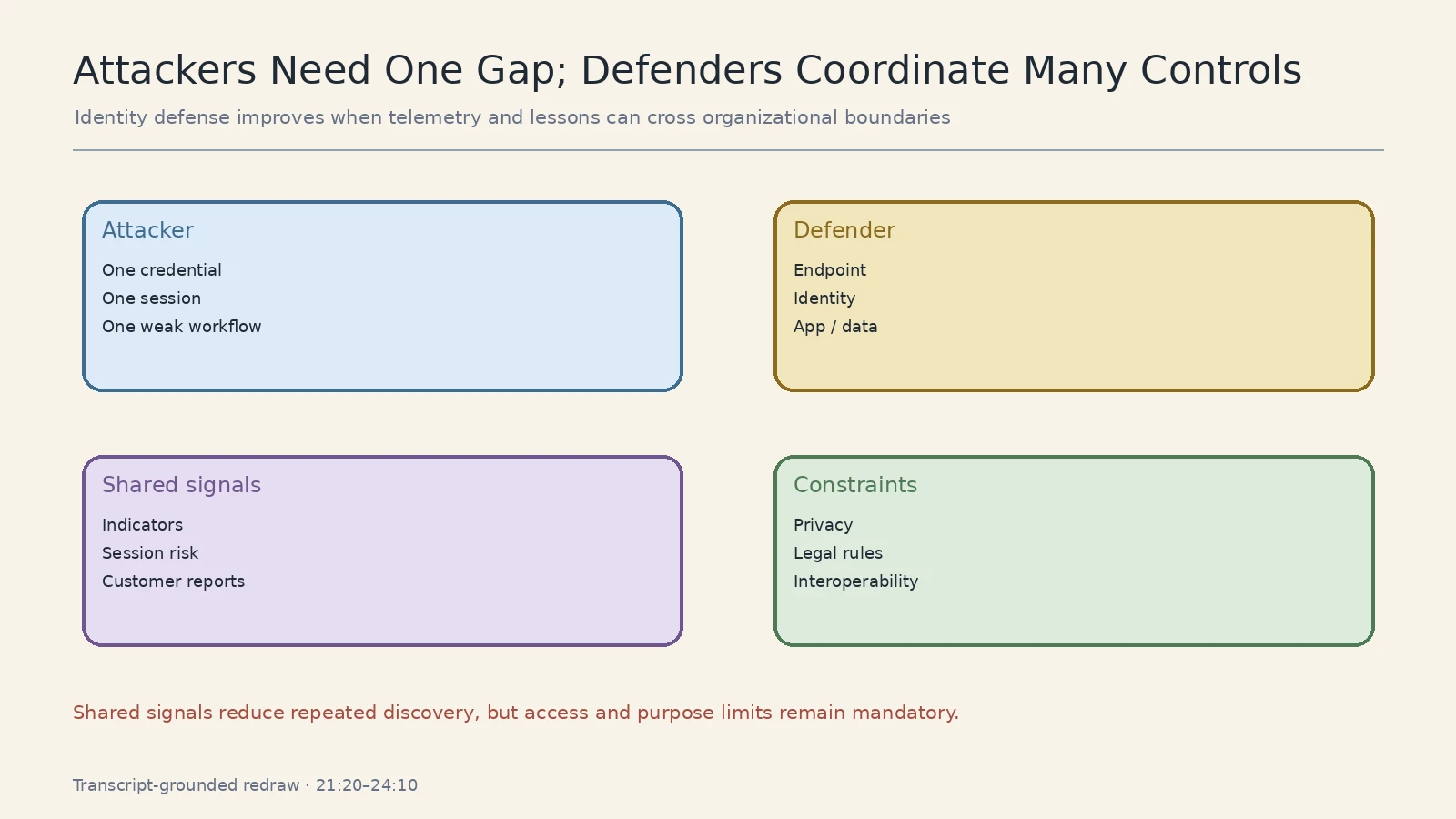
来源:本地字幕 21:20–24:10;概念重绘。
读图:Shared signal 也要最小化
Indicator 可以是 suspicious IP、session risk、credential compromise 或 device posture;共享前应定义 schema、confidence、purpose、retention 和 recipient。传递过少会失去防御价值,传递过多则扩大隐私和商业敏感数据风险。Signal 应触发本地 policy evaluation,而不是让外部来源直接拥有最终 deny 权限。
Zero Trust:显式、上下文与可撤销的信任
Zero Trust 不是“永远不信任任何人”,而是不因网络位置或一次登录永久授予信任。NIST SP 800-207 强调每次访问按 subject、asset、environment 与 policy 做显式决策,采用 least privilege,并假设网络可能已被攻破。现代 identity policy 还会在 session 中持续接收风险信号并 step-up、降权或 logout。
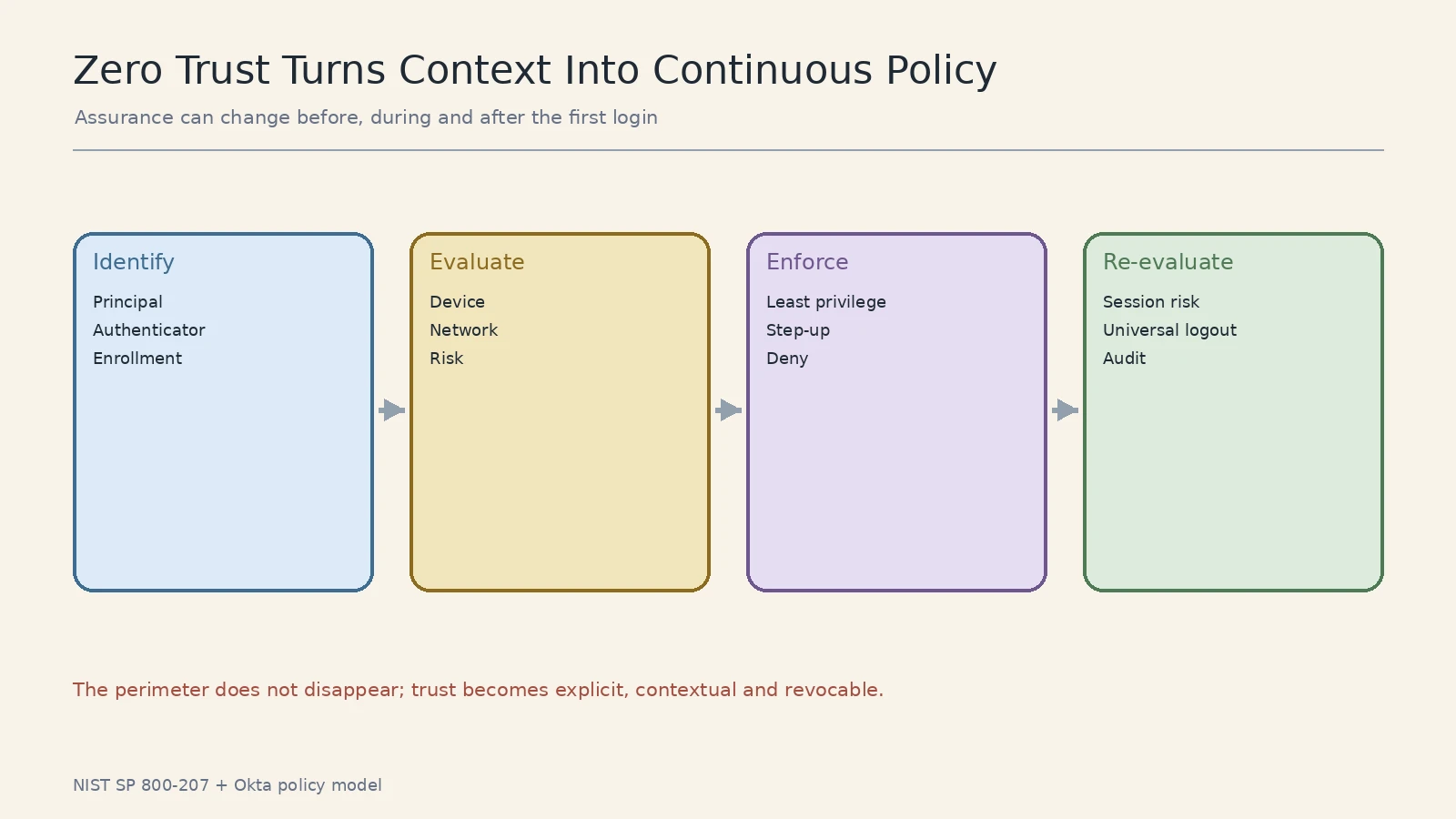
来源:NIST SP 800-207;Okta policy/Identity Threat Protection;概念重绘。
读图:Policy evaluation 不止发生在登录时
Identify 建立 principal 与 authenticator;evaluate 汇集 device、network 和 risk;enforce 输出 least privilege、step-up 或 deny;re-evaluate 在 session 风险变化后 revoke 或 universal logout。持续评估并不意味着无限监控,而是为高价值 action 选择必要信号,并让 session 拥有明确 expiry 与 revocation path。
Zero Trust 不能修复混乱的 entitlement
如果组织不知道谁拥有 service account、哪些 group 对应何种权限、离职何时传播或应用是否支持 revoke,那么更频繁认证只能反复验证同一个过度授权主体。Zero Trust 前提是 inventory、ownership、least privilege 和 lifecycle hygiene。
本章小结
Attack asymmetry 要求多层防御和共享信号,Zero Trust 则把信号转成显式、最小权限、可撤销的访问决策。两者都依赖清洁 identity state 与审计边界。
AI Agent Identity:Delegation 而不是共享秘密
课堂在 2025 年已经指出 agent framework 的安全缺口:脚本和 service account 早已代表人或系统执行任务,LLM agent 只是让行为更动态、工具更多、自然语言意图更难精确约束。核心问题不是“agent 有没有用户名”,而是谁授权它、它代表谁、能访问哪个 audience、可执行哪些 action、何时过期以及如何撤销。
Principal、delegation 与 OAuth
service account 是供软件或 workload 使用的非人类账户;non-human identity(NHI)泛指 service、workload、device 或 agent principal。OAuth 2.0 是 delegated authorization framework,让 client 获得 scoped access token,而不必持有用户密码;OpenID Connect(OIDC)在 OAuth 之上提供身份层,用 ID token 表达认证结果。
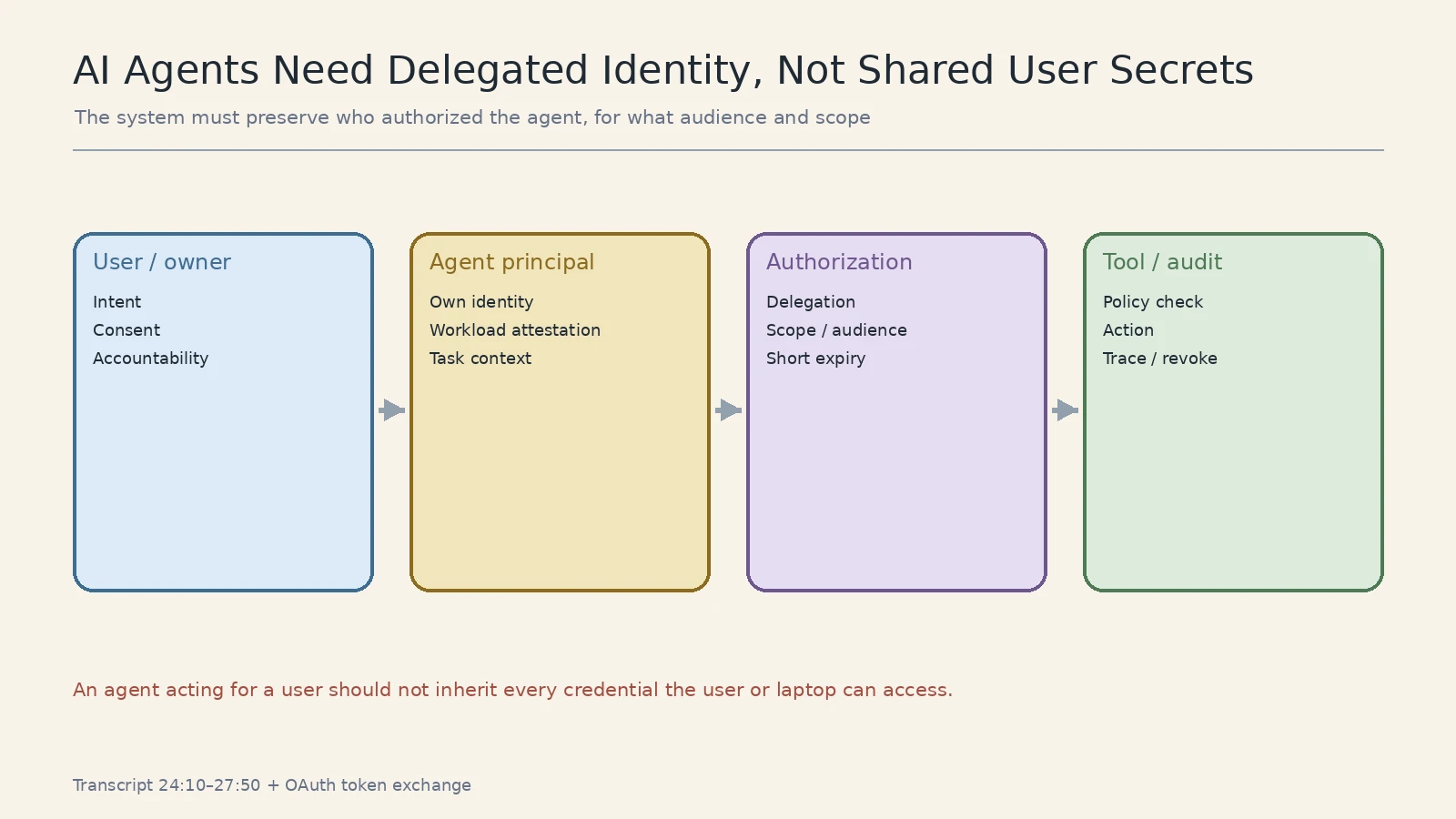
来源:本地字幕 24:10–27:50;OAuth token exchange;概念重绘。
读图:区分“agent 是谁”和“它代表谁”
User/owner 提供 intent 与 consent;agent principal 证明 workload identity;authorization server 依据 delegation、scope、audience 和 expiry 签发 token;tool/resource server 再做 policy check 并写 audit。token exchange 允许系统把已有 token 交换为面向特定 audience、权限更窄的新 token,同时保留 actor 与 subject 关系,避免把用户的 broad token 直接交给 agent。
课堂提示
McKinnon 提醒学生,不要被“agent 是全新事物”迷惑:cron job、script 和 service account 早就在替系统行动。真正新增的是能力和自主性扩大,而很多 framework 仍把 security 放在最后,甚至让开发机积累可访问所有系统的 token。
Token 是有生命周期的 capability
access token 是向 resource server 表达授权的凭证;bearer token 被谁拿到谁就能使用,因此必须限制 scope、audience 和 lifetime,并尽量采用 sender-constrained/bound token。Agent task 完成、owner 离职、device 风险、模型被禁用或 tool policy 变化时,都应能 revoke 现有 session/token。
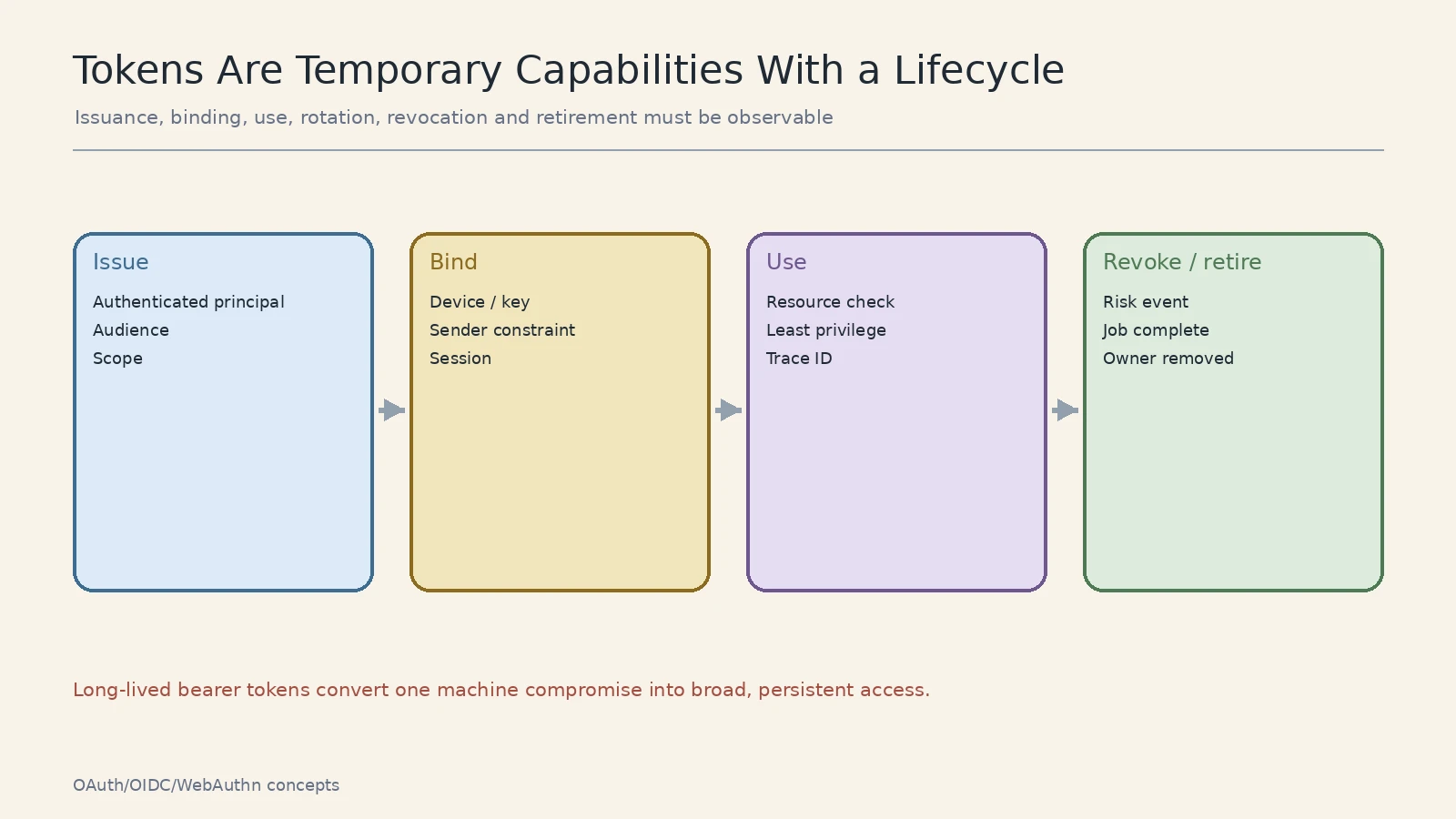
来源:OAuth/OIDC/WebAuthn 概念;概念重绘。
读图:Least privilege 要具体到任务
Issue 阶段确认 principal、audience、scope 和 expiry;bind 阶段关联 key/device/session,减少 token theft 后的可用性;use 阶段 resource server 检查 action 与 trace ID;revoke/retire 阶段响应 risk、job completion 或 owner removal。Agent 若只需读取一个 issue 并创建草稿,就不应获得 repo admin、billing 或长期 refresh token。
Delegation record 的最小字段
每次 agent delegation 至少记录:human/organizational owner、agent principal、subject、requested task、resource audience、approved scopes、policy/version、issue/expiry、token/session ID、tool actions、result、revocation reason。这样 incident response 才能回答“哪个人授权了哪个 agent 对哪个系统做了什么”。
Agent memory 不能成为 credential warehouse
Prompt、memory store、trace 和 local workspace 常被设计为可检索上下文,若把 API key、refresh token 或 session cookie 混入其中,模型输出、插件和调试日志都可能扩大泄露面。Secrets 应放在专门 vault,通过 short-lived credential broker 按 task 注入,并从模型上下文和普通日志中排除。
本章小结
Agent identity 的关键是 actor/subject 分离、delegation、least privilege、short-lived token 和 audit。共享用户密码或长期 token 会把一次 agent/机器 compromise 变成跨系统持久访问。
Auth0 Acquisition:共享 Primitive,不急于合并所有边界
McKinnon 把 Okta 与 Auth0 描述为互补:前者长期面向 workforce/IT,后者以 developer-first customer identity 著称。两者共享 directory、authentication、authorization、protocol、security 和 scale primitive,却服务不同 buyer、end user、SDK、customization 与 release expectation。并购架构的第一原则不是尽快画成一张 org chart,而是保护 customer contract。
Workforce Identity 与 Customer Identity
Workforce identity 关注员工、contractor、IT administration、enterprise app 和 lifecycle;customer identity 关注产品终端用户、developer integration、custom UX、social login、application-specific profile 与互联网流量。共同平台可以复用 protocol、threat intelligence 和 reliability practice,但 runtime migration、tenant model 与 developer experience 需要独立验证。
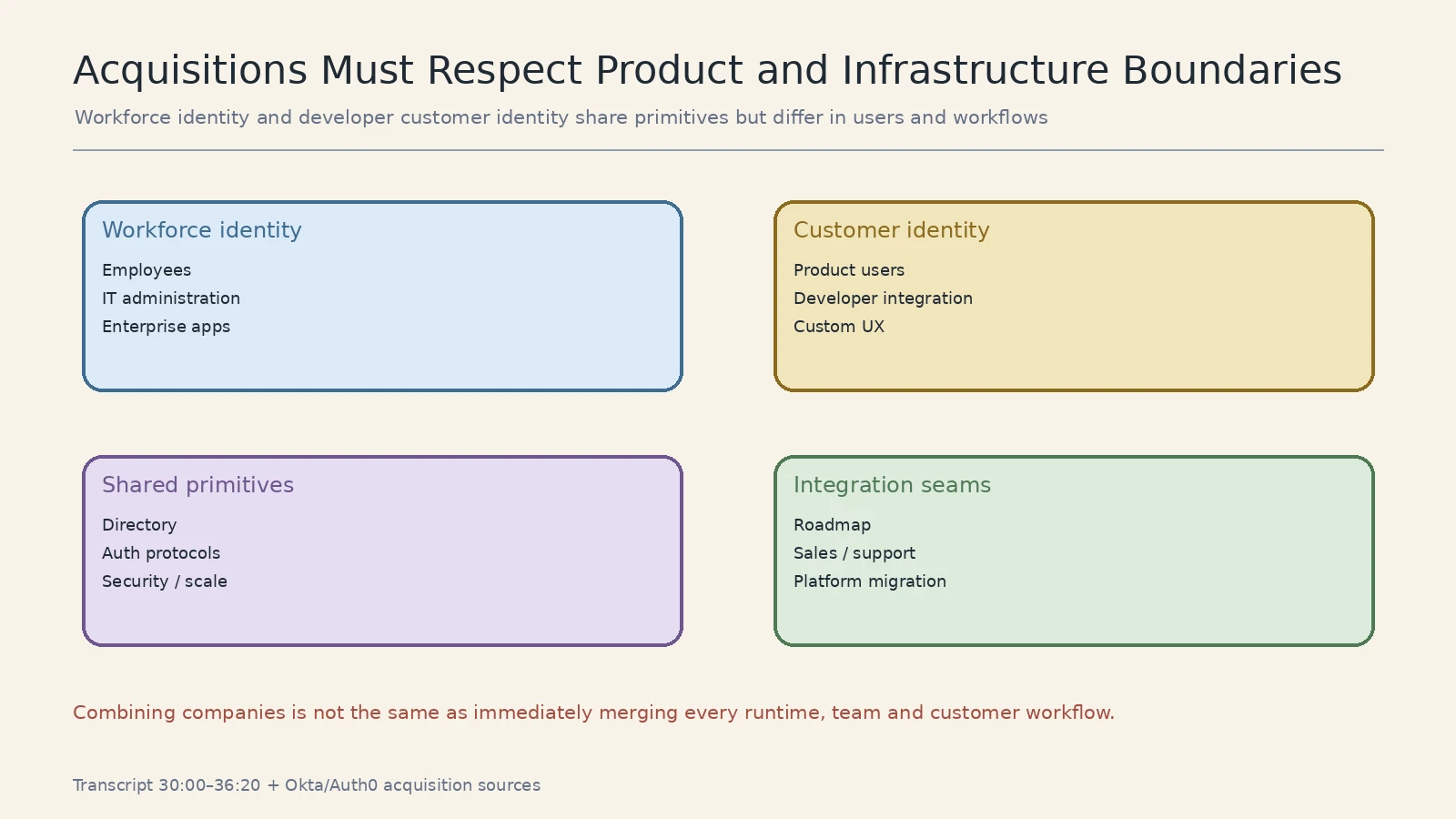
来源:本地字幕 30:00–36:20;Okta/Auth0 2021 官方并购资料;概念重绘。
读图:Shared primitive 不等于 shared runtime
两类产品都需要 directory、OAuth/OIDC、MFA、security 和 scale;但 workforce buyer 可能要求 IT policy、employee lifecycle 与 enterprise integration,customer identity 则强调 SDK、品牌化体验、极端峰值与 developer control。并购后应先统一 threat intelligence、support escalation 和 strategic interface,再用 compatibility、SLO 和 migration evidence 决定是否合并 runtime。
课堂提示
讲者回顾并购时认为,投资者对 M&A 的怀疑比自己预期更强;他也承认在低利率和高速增长环境下,部分业务整合可能推进过快。这个反思提醒系统团队:短期增长会掩盖 integration cost,不能把宏观顺风误当成架构已经验证。
Platform consolidation 的三类隐藏成本
统一销售包装可能先于 entitlement 和 billing 一致;统一 console 可能掩盖不同 tenant/security model;统一 backend 则会扩大 blast radius、迁移状态并改变客户合规边界。每一步都需要 rollback、data migration validation、customer communication 和 parallel run,而不是以“one company”替代技术验收。
本章小结
并购整合是 product contract、runtime state 与组织激励的共同迁移。共享 identity primitive 可以产生协同,但 preserve boundary 往往比立即统一更安全。
Durable Trust:Reliability、Security 与透明恢复的复利
Identity startup 的早期客户必须相信一个小团队能保护组织前门、不会频繁维护停机,并能在事故中承担责任。McKinnon 的 Salesforce 经验提供初始 credibility,但长期信任只能由 production evidence 积累:稳定服务、正确 change、诚实 incident response、customer guidance 和持续平台投入。
Trust Flywheel
可靠服务让客户扩大 deployment;更多应用和用户带来更丰富的 integration/context,也扩大责任;security evidence 与透明 RCA 帮助客户判断 residual risk;客户信任又带来续约、reference 和更深平台采用。飞轮也可能反向运行:一次 poorly handled incident 不只损害当期 SLA,还会让客户减少接入范围,削弱未来 context 和产品价值。
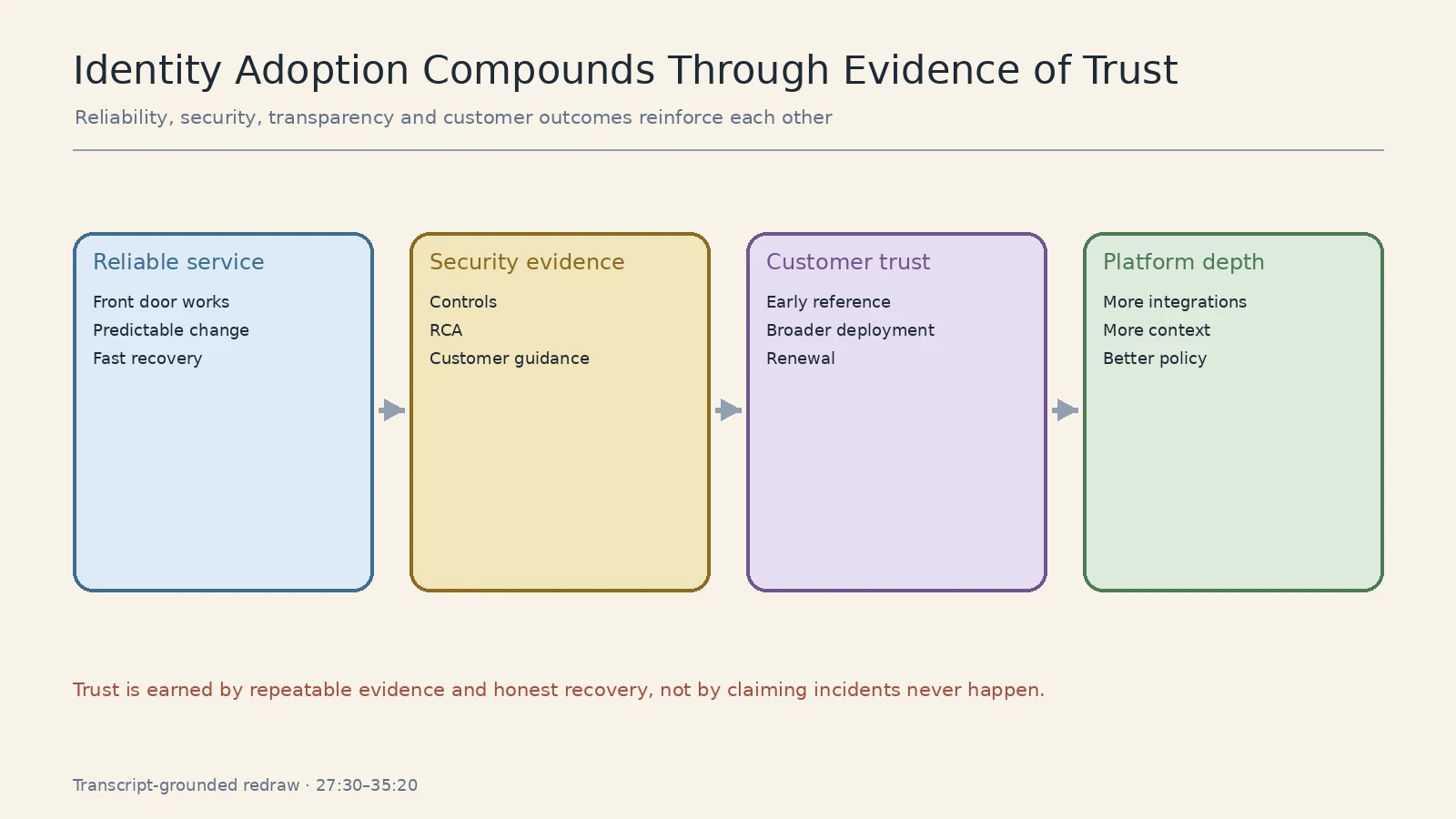
来源:本地字幕 27:30–35:20;概念重绘。
读图:Trust 是证据累积,不是零事故承诺
Reliable service 证明 front door 可依赖;security evidence 展示 control 和学习能力;customer trust 体现为扩大部署、reference 与 renewal;platform depth 又改善 integration 和 policy context。任何大型系统都无法诚实承诺永不出事故,但可以承诺快速发现、限制 blast radius、公开可行动事实并完成可验证 remediation。
课堂提示
讲者说,早期客户不仅在买一个功能,也在判断“这个人会不会卖完就走、能不能把服务做稳”。他的过往工程经验提供了第一轮信任,但后续每次 outage、breach 和恢复都会重新定价这份信任。
本章小结
Identity trust 由长期运营证据构成。Reliability、security、transparency 与 customer outcome 互相强化,品牌口号只能放大已有证据,不能替代它。
AI Adoption:从 Mr. T Demo 到 Category-Defining Workflow
访谈最后,McKinnon 用早期 iPhone 应用类比 AI:硬件/模型能力显然重要,但最初大量应用只是把新能力包装成 novelty,真正改变行业的是后来才出现的 Uber 式 workflow。这个判断不是说 AI 没价值,而是提醒 incumbent 和创业团队区分 capability shock、demo、repeatable workflow 与 organization redesign。
技术能力与组织惯性
大型公司拥有客户、数据和流程,也有 role、budget、support model 与文化惯性。即使 AI agent 能完成部分 support、operations 或 security task,组织仍需重写 accountability、quality review、exception handling、identity delegation 和 performance metric。若只在旧流程前加聊天框,系统可能得到一个“Mr. T app”,却没有改变 outcome economics。
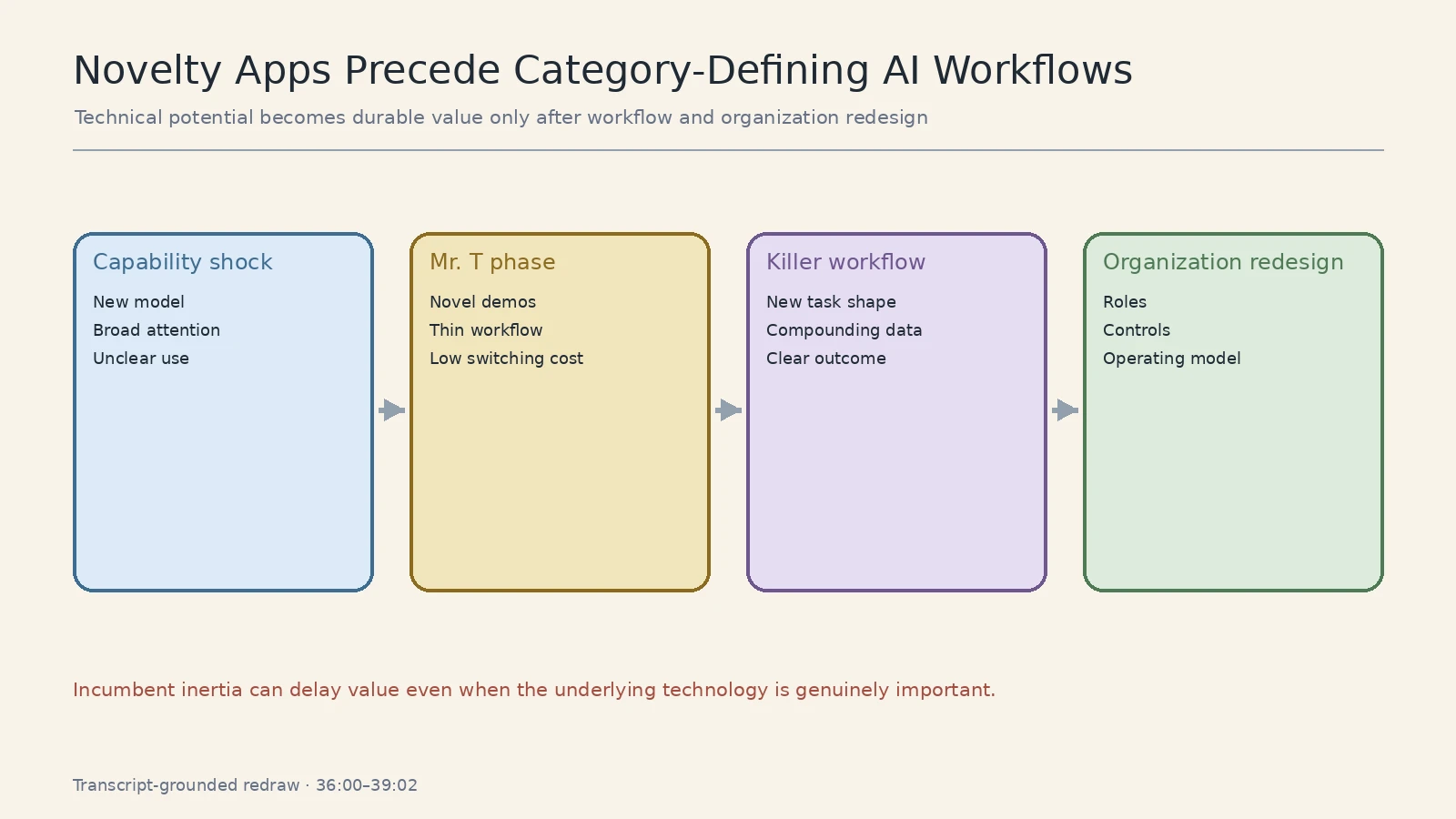
来源:本地字幕 36:00–39:02;概念重绘。
读图:判断 killer workflow 的四个问题
它是否完成以前无法经济完成的任务,而非只换 UI?使用是否产生 compounding data/feedback?失败是否有明确 owner 和 recovery?组织是否愿意改变 role、process、control 与 pricing?如果答案都是否,应用可能仍是有趣 demo;如果 workflow、distribution 与 governance 同时变化,技术才可能形成新的 category。
课堂提示
McKinnon 不是 AI doom 叙事,也没有声称 killer use case 已经确定。他把当前阶段比作 iPhone 早期会说俏皮话的 Mr. T 应用:大家知道平台重要,但“像 Uber 一样因新能力而诞生的全新工作流”仍在形成。
Incumbent inertia 既是风险也是安全缓冲
旧流程会阻碍有价值的自动化,也可能暂时阻止未经治理的 agent 获得生产权限。组织重设计应同时移除无效 handoff 和增加 delegation、review、audit、fallback;“AI-first”不能成为绕过 identity、change management 与 incident response 的理由。
本章小结
AI 价值从 capability 到 workflow,再到 organization。Identity infrastructure 在这条路径上不是后置登录组件,而是 agent accountability、least privilege 和 cross-tool audit 的前提。
总结与延伸
本讲从 Okta 创业与运营经历提炼出 identity infrastructure 的可迁移原则:
- Transition 需要 wedge:技术变迁提供窗口,客户今天愿意付费的窄入口负责启动,平台深度负责长期价值;
- Identity 是 control plane:directory、authentication、authorization、provisioning、session 与 audit 共同决定访问;
- Front door 同时要求安全和可用:availability、latency、correctness、blast radius 与 safe change 必须联合验收;
- 信念必须连接 evidence:低概率环境需要 daily progress、buyer signal 和诚实 uncertainty,而非拒绝数据;
- 治理依赖无失真信息:CEO 与 board 要把坏消息转成 options、decision rights 和 follow-through;
- Incident 必须关闭学习闭环:containment、RCA、remediation、notification 和 culture change 缺一不可;
- Zero Trust 建立可撤销信任:上下文、least privilege、step-up 和 continuous re-evaluation 依赖干净 lifecycle;
- Agent 使用 delegation:独立 principal、actor/subject、short-lived scoped token、vault 与 audit 替代共享秘密;
- 并购先保护 customer contract:共享 primitive 不代表立即合并 runtime、团队和产品工作流;
- AI 从 demo 走向 workflow:category value 需要能力、流程、组织和安全控制共同变化。
Identity Architecture 作业
为一个“AI agent 代表员工读取工单并创建代码草稿”的系统提交一页设计:画出 human、agent principal、authorization server、ticket system、code host 和 audit;定义 OIDC/OAuth/token-exchange flow、scope、audience、expiry、vault、session revoke 与 owner offboarding;再写出 IdP outage、stale group、token theft 和 agent compromise 的降级策略。禁止让 agent 直接继承用户长期 token。
拓展阅读
- Okta Universal Directory:统一 identity data model 与 source integration。
- Okta Identity Engine policies:global session 与 app sign-in assurance。
- Okta support-system incident RCA:timeline、logging gap 与 remediation。
- NIST SP 800-207:Zero Trust Architecture。
- RFC 8693:OAuth 2.0 Token Exchange。
- RFC 7644:SCIM provisioning protocol。
- WebAuthn Level 3:phishing-resistant public-key authentication。